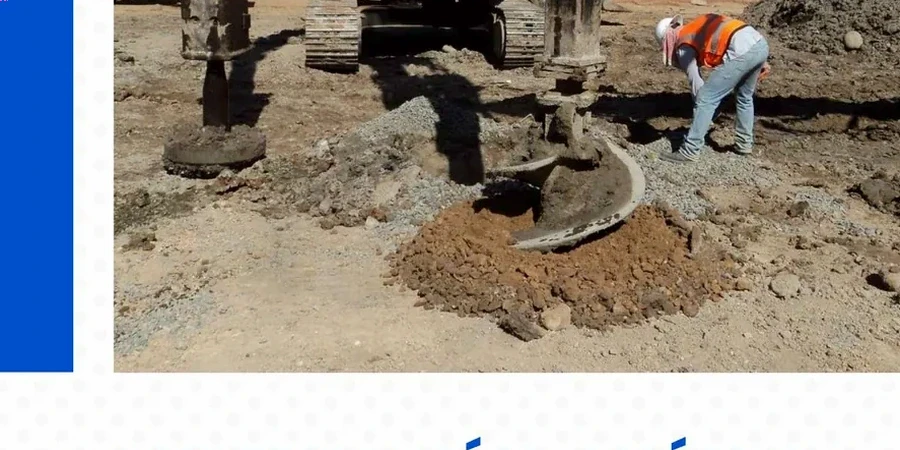
Sunnyvale sits at just 128 feet above sea level on the floor of the Santa Clara Valley, where decades of development have placed critical infrastructure atop layers of compressible Bay Mud and alluvial deposits. The 1989 Loma Prieta earthquake was a wake-up call for the region, reminding engineers that soft soils amplify seismic waves and threaten foundation stability. In our knowledge, stone column design becomes a first-line solution when traditional shallow foundations cannot meet settlement or bearing capacity requirements. The dense, compacted columns of crushed rock driven into the ground create a composite mass that drains pore pressures rapidly during shaking, which is exactly what projects in this corner of Silicon Valley demand. We approach each Sunnyvale site by first characterizing the subsurface through in-situ testing, then tailoring the column grid to the specific stratigraphy encountered, because no two parcels behave identically when the ground starts moving.
Stone columns in Sunnyvale do more than carry load—they create a drainage path that dissipates earthquake-induced pore pressure before it can liquefy the surrounding soil.
Site-specific factors
The Santa Clara Valley's subsurface is dominated by Holocene alluvium interspersed with thick lenses of Young Bay Mud—a notoriously compressible, low-strength estuarine clay that can lose significant shear strength during cyclic loading. Sunnyvale's location within the broader San Andreas Fault system means a design-level earthquake can generate peak ground accelerations exceeding 0.4g in some microzones, triggering excess pore pressure buildup in saturated granular layers. Stone column design directly counters this mechanism by providing vertical drains that shorten the drainage path from tens of feet to just a few feet between columns. However, the risk we flag early in any Sunnyvale design is the presence of interbedded organic layers or peat pockets, which can creep under sustained load even after vibro-replacement treatment. To manage this, we combine in-situ CPT soundings with laboratory consolidation tests to confirm that the target depth extends into competent bearing strata. A thorough exploration program that includes CPT testing helps us calibrate the column length and spacing for the actual stratigraphic profile, rather than relying on generalized correlations that may not capture local variability.
Questions and answers
What is the typical cost range for stone column design and installation in Sunnyvale?
For a standard commercial lot in Sunnyvale, stone column design and installation typically ranges from US$1,580 to US$5,610, depending on depth, column spacing, and access conditions. The design engineering component is a fraction of the total; the larger variable is the installation footage and aggregate requirements. We offer a firm proposal after reviewing your geotechnical report and site layout.
How do stone columns perform during a Sunnyvale earthquake compared to deep foundations?
Stone columns improve the ground mass itself, creating a composite material that drains excess pore pressure during shaking. This means the entire treated zone becomes more resistant to liquefaction and cyclic softening. Deep foundations like piles bypass the weak soil entirely, but they do not mitigate settlement in the surrounding grade. In many Sunnyvale projects, we combine both approaches: stone columns for ground improvement under floor slabs and pile foundations for concentrated structural loads.
What subsurface conditions in Sunnyvale make stone columns the right choice?
The classic profile that calls for stone columns here is 10 to 30 feet of soft to medium-stiff clay overlying dense alluvium or bedrock. When CPT tip resistance falls below 10 tsf and the groundwater table is within 6 feet of the surface, vibro-replacement becomes a cost-effective alternative to deep foundations. We also look for the absence of thick organic layers, which can compromise long-term performance even after treatment.
How long does the stone column design process take from investigation to final report?
Once the subsurface investigation is complete, our typical design turnaround for a Sunnyvale project is two to three weeks. This includes developing the column grid layout, computing the area replacement ratio, and preparing installation specifications. The field installation itself moves quickly—vibro-replacement rigs can install 20 to 40 columns per day depending on depth and access, so most commercial lots are treated within a week.