← Home · Roadway

Flexible Pavement Design in Sunnyvale: Avoiding the Cracking Problem

Together, we solve the challenges of tomorrow.

LEARN MORE →

The most common mistake we see in Sunnyvale commercial projects is treating the subgrade as a uniform material. It is not. The alluvial clays near Moffett Park behave completely differently than the older deposits west of Wolfe Road. A rigid design assumption leads to longitudinal cracking within the first two rainy seasons. We see it all the time. We apply the AASHTO 93 empirical method but we calibrate it with site-specific CBR testing and Atterberg limits. This prevents over-designing the asphalt thickness. It also prevents under-designing for the base course. The result is a pavement section that actually survives the seasonal moisture swings we get here. The design must account for the high plasticity index of these clays. Otherwise the structural number means nothing.

A pavement is only as strong as its preparation layer. In Sunnyvale, controlling the expansive clay subgrade is the single most critical design parameter.

Methodology and scope

The pavement section we specify for the Peery Park area looks very different from what we use near the Sunnyvale Baylands. The Baylands sit on younger bay mud with a much higher water table. You need a solid separation geotextile and a thicker aggregate base. In Peery Park, the older clay is stiff but expansive. Here we often combine our pavement design with a soil stabilization strategy to reduce the plasticity of the top six inches. This locks in the subgrade stiffness. The granular base course must be open-graded in high-groundwater zones. We verify this with grain size analysis in our accredited laboratory. This ensures the drainage layer does not trap water against the asphalt. Our team also evaluates the traffic count using ESAL projections for delivery trucks. We do not guess. We calculate.
Flexible Pavement Design in Sunnyvale: Avoiding the Cracking Problem
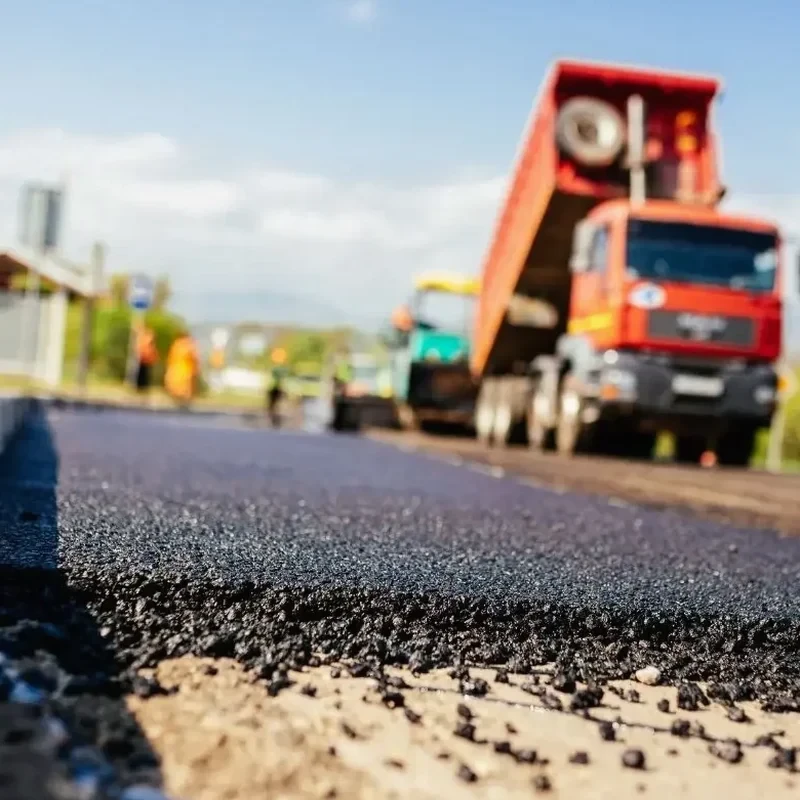
Technical reference image — Sunnyvale

Site-specific factors

Sunnyvale sits on the Santa Clara Valley alluvial plain. The subgrade is predominantly Quaternary alluvium. These clays have a Liquid Limit often exceeding 50. When they get wet, they swell. When they dry, they shrink. This volume change destroys the fatigue life of the asphalt layer if the base is too thin. A common failure mode here is 'alligator cracking' spreading from the edges inward. It is not a surface defect. It is a structural failure caused by a weak subgrade. The risk is highest in older commercial lots near the Caltrain corridor. We mitigate this by specifying a minimum base thickness that isolates the pavement from the active zone of moisture fluctuation. Ignoring this local geology guarantees a premature overlay within five years.

Need a geotechnical assessment?

Reply within 24h.

Email: info@geotechnicalengineering1.biz

Watch the video

Technical parameters

ParameterTypical value
Design MethodologyAASHTO 93 (Empirical)
Target Reliability85-95% (Urban Arterials)
Subgrade Resilient Modulus (Mr)3,000 - 7,000 psi
Structural Number (SN)Determined by ESAL & Mr
Serviceability Loss (ΔPSI)1.7 - 2.2
Asphalt Layer Coefficient (a1)0.42 - 0.44
Drainage Coefficient (m)0.8 - 1.0

Complementary services

01

Subgrade Characterization

We determine the resilient modulus and swell potential of Sunnyvale clays using certified laboratory testing.

02

Traffic & ESAL Analysis

We project the 20-year truck traffic to correctly size the structural number for your loading scenario.

03

Pavement Section Design

We specify the layer thicknesses, materials, and compaction specs for asphalt, base, and subbase.

04

Forensic Evaluation

We diagnose existing pavement failures in Sunnyvale to determine if a simple overlay will suffice or if a full reconstruction is needed.

Applicable standards

ASTM D1883 (CBR), ASTM D4318 (Atterberg Limits), AASHTO Guide for Design of Pavement Structures (1993)

Questions and answers

What is the typical flexible pavement structure for a Sunnyvale parking lot?

For a standard light-duty parking lot in Sunnyvale, we typically recommend 3 inches of hot mix asphalt over 8 to 10 inches of aggregate base. This assumes a properly stabilized subgrade. High-traffic loading docks require a thicker section.

How does the expansive clay in Sunnyvale affect pavement design?

The high PI clays absorb water and swell. This reduces the subgrade support. We combat this by using a thicker aggregate base and sometimes chemically treating the clay to lower its plasticity before paving.

What is the cost range for a flexible pavement design report in Sunnyvale?

A complete pavement design report, including site investigation, lab testing (CBR, gradation), and the structural design, generally ranges from US$1.470 to US$4.900 depending on the project size and traffic complexity.

Why is the AASHTO 93 method still used for flexible design?

It is the most solid empirical method available. It correlates soil strength, traffic loads, and environmental factors into a single structural number. We trust it for Sunnyvale conditions because it handles the local clay variability well when calibrated with local data.
Location and service area

We serve projects in Sunnyvale and surrounding areas.

View larger map