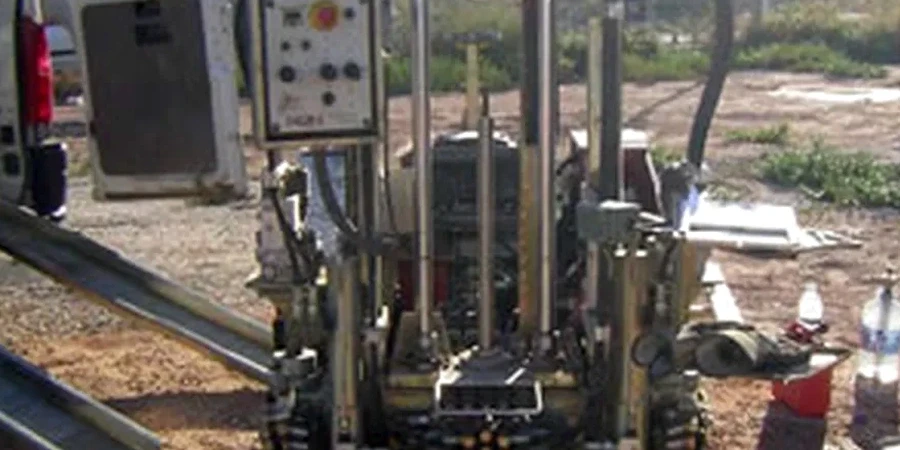
The CPT truck arrives on site in Sunnyvale with its hydraulic push system ready to deploy. A cone penetrometer, hardened steel with a conical tip, gets pushed steadily into the ground at a constant rate. Unlike traditional drilling, there is no cutting, no spoils pile, no disturbed samples. Sensors inside the cone measure tip resistance and sleeve friction in real time, and a pore pressure transducer tracks how groundwater responds as the cone advances. Across Sunnyvale’s alluvial plain—where layers of clay, silt, and sand alternate unpredictably—this continuous profile reveals exactly where bearing capacity shifts and where saturated lenses might go unstable during a seismic event. For engineers working near the Guadalupe Slough or on infill sites west of Mathilda Avenue, the CPT test offers a fast, repeatable window into the subsurface that standard SPT borings often miss.
In Sunnyvale’s layered alluvial soils, CPT data gives you a near-continuous log that catches thin, problematic layers SPT borings routinely miss.
Site-specific factors
One pattern that shows up repeatedly in Sunnyvale is the presence of artesian conditions in deeper sand units, particularly on parcels east of Highway 101 where the Santa Clara sub-basin exerts upward hydraulic pressure. We’ve seen jobs where the contractor drilled a conventional boring, didn’t notice the piezometric head building, and later had to deal with a flooded excavation that set the schedule back three weeks. The CPT’s pore pressure dissipation test takes a direct reading at the cone face and then monitors decay over time, giving a clean measurement of hydrostatic pressure and an estimate of hydraulic conductivity in situ. That single test can inform the dewatering plan, the cutoff wall depth, or the decision to switch to a mat foundation with a waterproofing membrane instead of isolated footings. When you skip the dissipation test, you are essentially guessing about groundwater behavior—and in Sunnyvale’s confined aquifer system, guessing is expensive.
Questions and answers
What does a CPT test cost for a typical Sunnyvale residential lot?
For a standard single-family lot in Sunnyvale, CPT testing generally runs between US$180 and US$240 per sounding, depending on total depth, number of dissipation tests, and whether seismic velocity measurements are included. Mobilization adds a separate line item, but for most R-3 zoned properties, one or two soundings are sufficient.
How deep can a cone penetrometer push in Sunnyvale’s soil?
In the younger alluvial deposits south of Highway 237, we routinely reach 60 to 80 feet before hitting refusal on the dense Pleistocene gravels. Near the bay margin, where soft Bay Mud extends deeper, we have pushed past 100 feet with a 20-ton rig. The limiting factor is usually the cone’s thrust capacity, not the soil itself, unless we encounter a thick gravel lens.
Do you need a drilling permit for CPT work in Sunnyvale?
CPT is considered a surface-disturbing activity but does not produce cuttings, so Santa Clara County Environmental Health generally classifies it as exempt from well permits. However, if the sounding is deeper than 50 feet or located in a designated groundwater protection zone, we coordinate with the county to confirm permit requirements before mobilization.