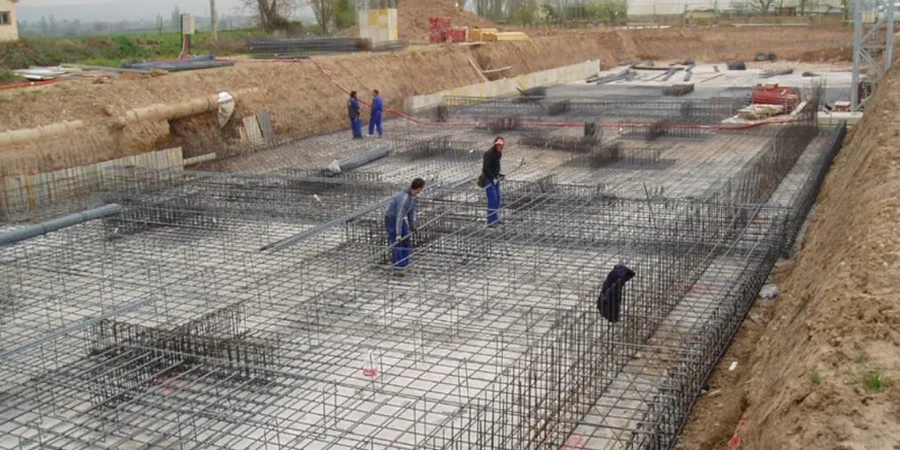
Sunnyvale sits at just 128 feet above sea level on the Santa Clara Valley floor, where the upper 30 to 50 feet of soil profile is dominated by Holocene alluvium — layers of lean clay, sandy silt, and occasional gravel lenses deposited by Stevens Creek. More than 152,000 people live here, and with tech campuses expanding south from Moffett Park toward El Camino Real, the demand for shallow foundation design that accounts for these variable deposits has never been higher. Many lots near the former orchard lands still carry pockets of compressible fill that standard presumptive bearing values miss entirely. When we run a plate load test on a Sunnyvale site, we often find the actual modulus of subgrade reaction differs by 30 percent or more from textbook assumptions — and that gap is where foundation performance gets decided before the first yard of concrete goes in. Our lab team ties every design recommendation back to measured strength parameters, not generic tables, because the clay lenses here can switch from stiff to soft within a single block.
Getting the bearing stratum right in Sunnyvale is about knowing which clay layer you are sitting on — the difference between 2,000 psf and 3,500 psf allowable bearing often comes down to three feet of depth.
Site-specific factors
We reviewed a tilt-up warehouse off Kifer Road where the geotechnical report called out 2,500 psf allowable bearing based on a single boring that hit stiff clay at 12 feet. The contractor poured strip footings in December, right after a wet November had raised the groundwater to within 4 feet of the bottom of excavation. By March, the southeast corner had settled nearly an inch and a quarter, cracking the slab-on-grade and pulling the panel joints out of alignment. The root cause was not a bad bearing number — it was a design that ignored seasonal water table rise and the corresponding reduction in effective stress in the upper clay. For shallow foundation design in Sunnyvale, we now require a wet-season groundwater observation as part of every scope unless the client can demonstrate continuous subdrainage; the IBC 1803.5.4 language on groundwater investigations is not optional here. Skipping that step can turn a straightforward spread footing job into an underpinning claim that costs six figures to resolve.
Questions and answers
What does shallow foundation design cost for a typical Sunnyvale residential or light commercial project?
For a site investigation, lab testing, and sealed design package covering isolated and continuous footings, most Sunnyvale projects fall between US$2,170 and US$3,380. The range depends on number of borings, depth to competent bearing, and whether a plate load test or CPT is needed to refine the modulus values.
How deep do footings need to go in Sunnyvale to get past the expansive clay?
In most of Sunnyvale, the high-plasticity clay is concentrated in the upper 5 to 8 feet. We typically seat footings at 36 to 48 inches below finished grade, which puts the bearing surface below the active moisture fluctuation zone. Where the plasticity index exceeds 25, we may recommend an additional 12 inches of embedment or a moisture-conditioned select fill pad beneath the footing.
Do you handle the city submittal and plan check process?
Yes. Our design packages are prepared to meet Sunnyvale Building Division requirements under the current California Building Code (IBC with state amendments). We include the geotechnical report, foundation plans with reinforcement schedules, and the required special inspection statement. If the plan checker requests additional calculations — say, for a retaining wall surcharge on adjacent footings — we turn those around quickly because we have the original lab data on file.