← Home · Laboratory

Grain Size Analysis (Sieve + Hydrometer) in Sunnyvale, CA

Together, we solve the challenges of tomorrow.

LEARN MORE →

We still see foundation reports in Sunnyvale that rely on visual-manual classifications for fill soils near Moffett Park. ASTM D2487 exists for a reason — the Unified Soil Classification System requires quantitative gradation data, not field estimates. When a mixed soil contains 12% fines instead of the assumed 5%, the drained shear strength and permeability assumptions change. On the alluvial plains between Stevens Creek and the Guadalupe River, these differences trigger unexpected settlement profiles. Running a full sieve stack plus hydrometer analysis — per ASTM D6913 and D7928 — eliminates the guesswork before the structural engineer sizes the footings. For projects near the South Bay salt ponds, we often pair grain size curves with Atterberg limits to confirm whether the fines are silty or clayey: two materials with very different behavior under cyclic loading. A CPT sounding alone will not give you the PSD curve, which is why the lab work remains essential.

A soil with 22% passing the No. 200 sieve does not drain like a clean sand — and Sunnyvale’s high water table turns that into a dewatering cost difference.

Methodology and scope

A recent mixed-use project along Mathilda Avenue hit a layer of sandy lean clay at 9 feet — the contractor anticipated clean sand based on the boring logs. The grain size analysis we ran on Shelby tube samples showed 22% passing the No. 200 sieve, with a hydrometer curve indicating a D10 of 0.003 mm. That shifted the USCS classification from SP-SM to CL, and the geotechnical engineer adjusted the allowable bearing pressure downward by 600 psf. Sunnyvale’s shallow groundwater — typically 5 to 10 feet below grade in the Santa Clara Valley aquifer zone — makes fines content critical for dewatering design; soils with over 15% silt demand a different wellpoint spacing than clean sands. Our lab runs the full nest from 3-inch down to the No. 200, then transitions to the 152H hydrometer with sodium hexametaphosphate dispersion per ASTM D7928 Method A. For road subgrade verification along arterial corridors like El Camino Real, the gradation envelope often must meet Caltrans Standard Specifications Section 19, and we cross-check the PSD against the CBR value to confirm the structural section design. When the gradation curve shows a gap-graded profile, the compaction response changes — and the sand cone density test field results only make sense when interpreted against a lab-generated Proctor curve from the same material.
Grain Size Analysis (Sieve + Hydrometer) in Sunnyvale, CA
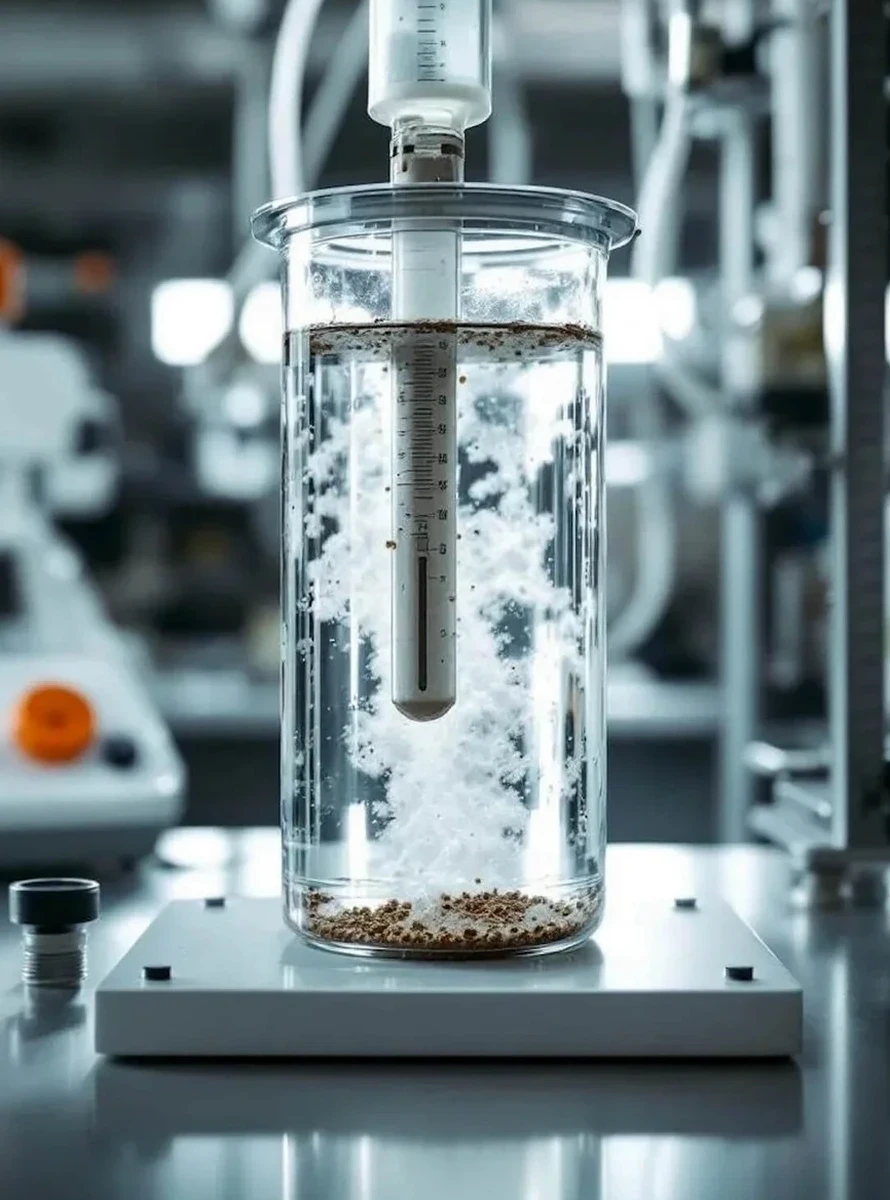
Technical reference image — Sunnyvale

Site-specific factors

Sunnyvale sits on Quaternary alluvial fan and basin deposits — interbedded clays, silts, sands, and gravels deposited by the ancestral Guadalupe River system. The layering is notoriously lens-like: a clean sand stratum can pinch out laterally and be replaced by fat clay within 30 feet. That stratigraphic variability means a single misclassified sample distorts the entire geotechnical model. A grain size analysis that skips the hydrometer on a soil with 10–15% fines risks calling a silty sand what is actually a clayey sand — two materials with opposite pore pressure responses during an earthquake. Sunnyvale is in Seismic Design Category D per ASCE 7, and the USGS probabilistic hazard maps show a 0.9g peak ground acceleration at the 2,475-year return period. In that shaking environment, fines-driven liquefaction susceptibility (per Seed & Idriss methodology) changes the foundation design from shallow footings to driven piles. We have seen this exact scenario on industrial redevelopments north of Highway 237, where post-gradation reclassification triggered a liquefaction assessment that the original report had dismissed.

Need a geotechnical assessment?

Reply within 24h.

Email: info@geotechnicalengineering1.biz

Technical parameters

ParameterTypical value
Test method (coarse fraction)ASTM D6913 / AASHTO T 27
Test method (fine fraction)ASTM D7928 (152H hydrometer)
Sieve range3 in. (75 mm) to No. 200 (75 µm)
Hydrometer range75 µm down to approx. 0.001 mm
Minimum sample mass500 g for soils with <10% gravel; up to 5 kg for granular fills
Dispersion agentSodium hexametaphosphate (40 g/L solution)
USCS classification outputASTM D2487 (group symbol + group name)
Typical lab turnaround3–4 business days (expedited 24-hr available)

Complementary services

01

Full Sieve Analysis (ASTM D6913)

Mechanical sieve shaker through 3-inch to No. 200 mesh. We wash the fines through the No. 200 sieve and report percent passing, D10, D30, D60, Cu, and Cc for every sample.

02

Hydrometer Analysis (ASTM D7928)

Type 152H hydrometer readings at 0.5, 1, 2, 5, 15, 30, 60, 240, and 1,440 minutes. Temperature-corrected with composite correction factor determined daily. Reported down to the colloidal fraction.

03

Combined PSD Curve & USCS Classification

Single merged gradation curve from coarse gravel through clay-size particles, with ASTM D2487 group symbol and group name assigned by a licensed geotechnical engineer.

04

Caltrans Subgrade Gradation Compliance Package

Targeted sieve sets matched to Caltrans Section 19 gradation bands for Class 1, Class 2, and Class 3 aggregate base, plus subgrade material. Includes PSD curve overlay on specification envelope.

Applicable standards

ASTM D6913-04(2009)e1 — Particle-Size Distribution of Soils Using Sieve Analysis, ASTM D7928-21e1 — Particle-Size Distribution of Fine-Grained Soils Using the Sedimentation (Hydrometer) Analysis, ASTM D2487-17e1 — Unified Soil Classification System, Caltrans Standard Specifications Section 19 — Earthwork (gradation envelopes for subgrade)

Questions and answers

How many pounds of soil do you need for a full sieve plus hydrometer test?

For a complete ASTM D6913 + D7928 analysis, we typically need about 3 to 5 pounds of representative material in a sealed bag. If the sample is predominantly granular with gravel, we may request up to 10 pounds to meet the minimum mass requirements in the standard. We can pick up samples from your Sunnyvale jobsite or you can drop them at our receiving window.

What does a grain size analysis cost in Sunnyvale?

A combined sieve and hydrometer analysis with full USCS classification runs between $110 and $180 per sample, depending on whether you need the basic PSD curve or the full report with gradation parameters, hydrometer table, and classification. Volume pricing applies at 10+ samples.

How long does the hydrometer portion actually take — can you speed it up?

The sedimentation part is governed by Stokes' Law and cannot be accelerated — the 24-hour reading is required by ASTM D7928. We start the hydrometer run the same day we receive the sample, so the full combined report is typically ready in 3 to 4 business days. For time-sensitive Sunnyvale projects, we offer an expedited 24-hour turnaround on the sieve fraction with a preliminary classification, followed by the final hydrometer data the next day.
Location and service area

We serve projects in Sunnyvale and surrounding areas.

View larger map