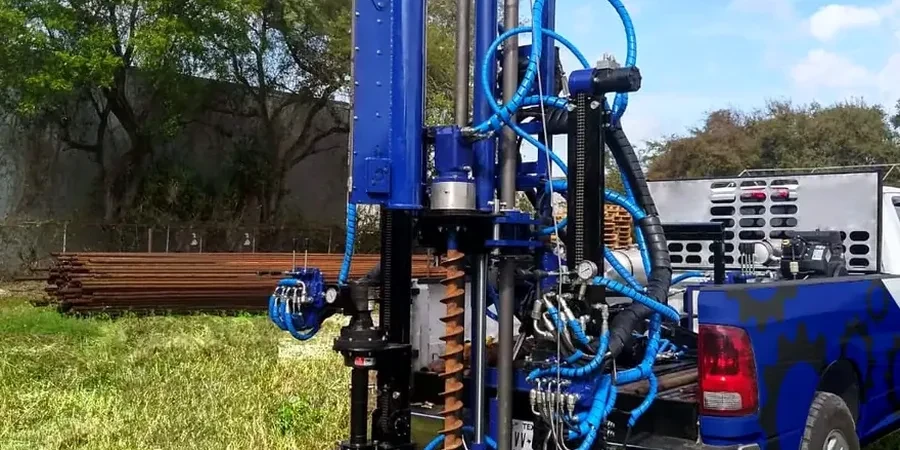
More than a few contractors in Sunnyvale have learned the hard way that guessing the bearing capacity in the Santa Clara Valley’s alluvial fans is a fast track to change orders. A standard penetration test (SPT) run according to ASTM D1586 eliminates that guesswork by delivering N-values and disturbed samples from the exact depths where your footings will bear. We run the split-spoon sampler with a 140 lb hammer dropping 30 inches, recording blow counts every 6 inches, and log the recovery so the geotechnical engineer can spot loose lenses, clay seams, or groundwater before the excavator even arrives. In a city where the shallow subsurface shifts from stiff clays to sandy silts within half a mile, pairing SPT data with a CPT profile often gives the most complete stratigraphic picture for mixed-use developments near the 237 corridor.
Sixty blows in eighteen inches is all the data you need to know that a shallow footing won't cut it on that corner of Mathilda Avenue.
Questions and answers
How much does an SPT boring cost in Sunnyvale?
A single SPT boring to 30 feet depth typically falls between US$530 and US$860, depending on access conditions, traffic control requirements, and the number of samples collected for lab testing.
How many SPT borings does the City of Sunnyvale require for a new single-family home?
The city reviews geotechnical reports on a case-by-case basis, but the California Building Code and standard practice generally require a minimum of two borings for a single-family residence, with additional borings if the site geology varies or previous fill is encountered.
Can SPT data be used to evaluate liquefaction potential in Sunnyvale?
Yes, the SPT is the most widely used field test for liquefaction assessment. The corrected N60 values are input directly into the Seed-Idriss simplified procedure to estimate the factor of safety against liquefaction at various depths, which is a standard requirement for projects in the South Bay.